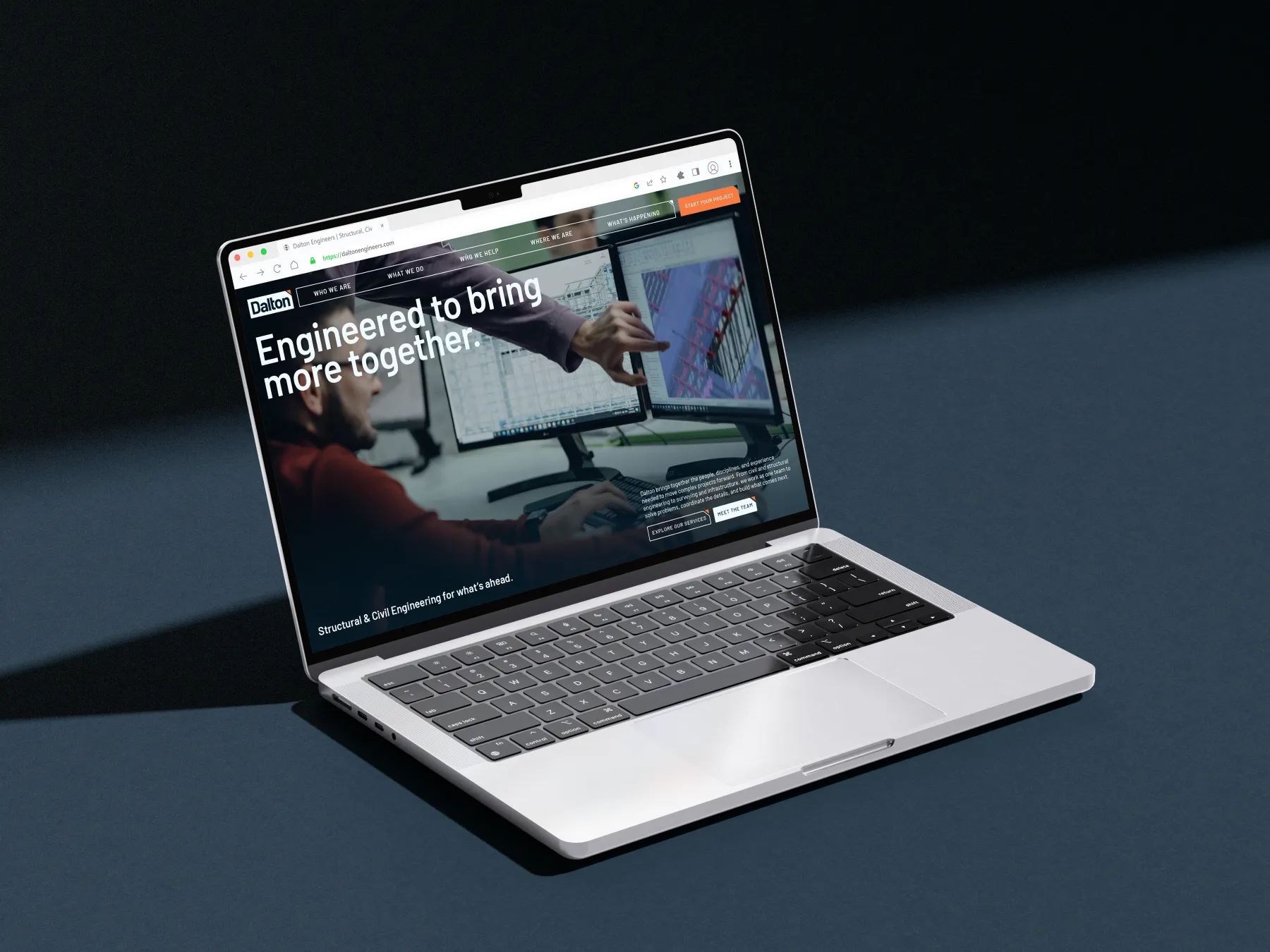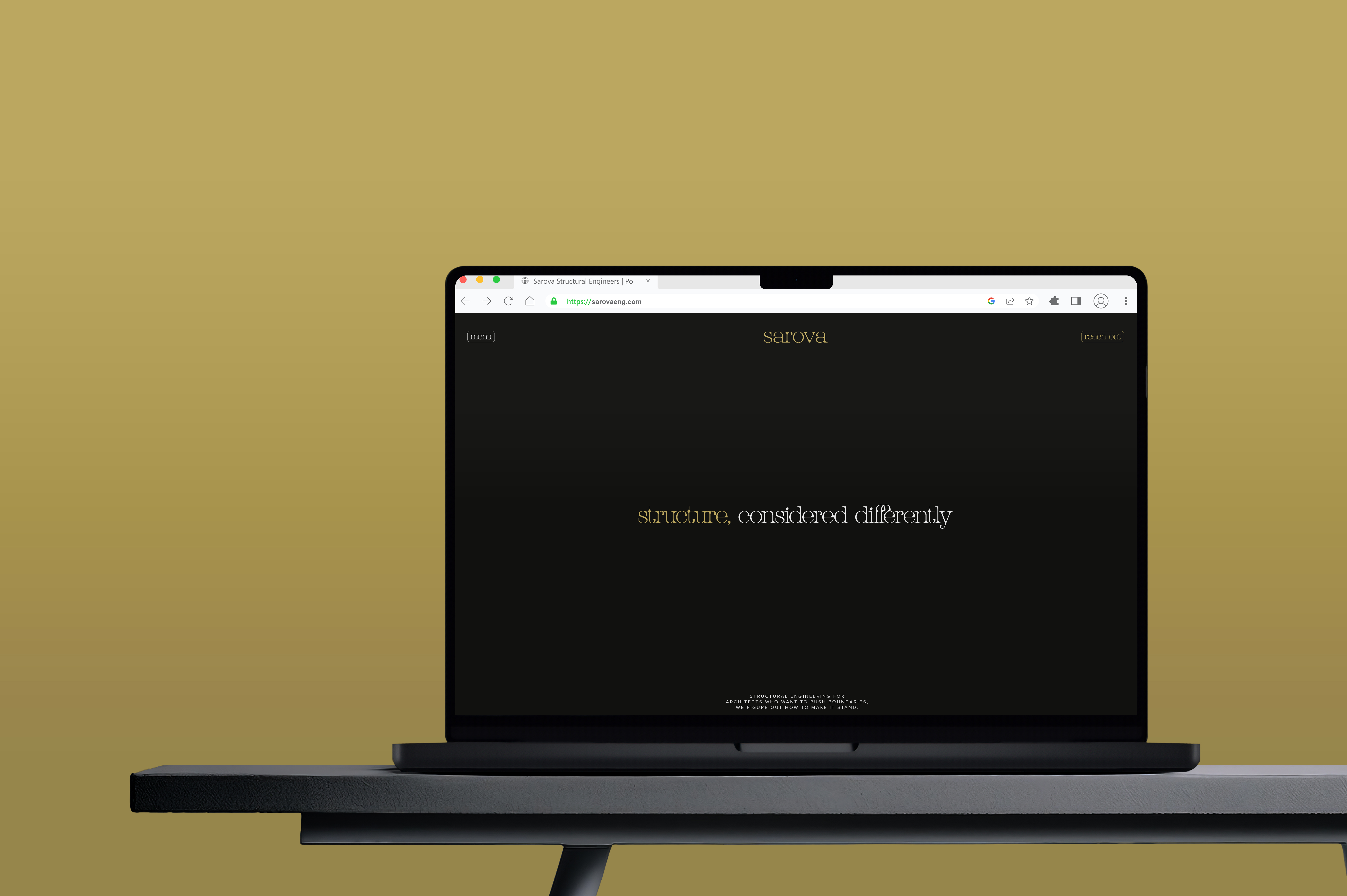
This is one of the more frustrating situations a firm can end up in. The site was expensive. It looks clean and modern. Everyone on the team likes it. And inquiries still are not coming in the way anyone expected.
The instinct at this point is usually to blame the design, and to start thinking about redesigning again. That is almost never the right diagnosis. A site that looks good and still is not converting has a specific handful of causes, and every one of them lives underneath the design, not in it.
The Site Never Tells Anyone If They're in the Right Place
A visitor lands on a homepage, scrolls for a few seconds, and makes a snap judgment about whether this firm is relevant to their specific problem. If the homepage speaks in general terms, full-service, collaborative, experienced, innovative, that visitor has no way to answer the question fast, and most of them will not stick around long enough to dig for the answer.
This is a positioning problem wearing a website costume. A structural engineering firm's homepage that reads "we provide comprehensive structural engineering services across all sectors" gives a visitor nothing to grab onto. The same firm's homepage saying something specific about the kind of work it actually does best gives a visitor an immediate, fast answer to the only question that matters in the first few seconds: is this the right firm for what I need. A beautiful site built around vague language will underperform a plain site built around a clear one, every time.
There Is No Real Proof, Only Claims
Every AEC website says some version of the same three things: quality work, strong relationships, and a track record of success. None of that is false, and none of it is persuasive, because every competitor is saying it too, in nearly the same language.
What actually moves someone from browsing to reaching out is proof, not claims. A specific project with real detail about the challenge and the outcome. A client quote that says something concrete rather than something pleasant. A credential or certification that matters to the specific audience evaluating the firm. A site with polished design and no real proof underneath it reads as confident on the surface and empty underneath, and sophisticated AEC buyers, the ones doing real evaluation before reaching out, notice that gap quickly.
The Path to Action Is Vague
A lot of AEC websites end every page the same way: a Contact Us button that leads to a blank form. No indication of what happens next. No sense of what the firm needs from the visitor before a conversation can happen. No hint of what a first call actually looks like.
That vagueness creates hesitation in exactly the visitors who are cautious enough to be worth pursuing. A procurement lead evaluating three firms, or a principal at a firm considering a rebrand for the first time, wants some sense of the process before committing to reach out. A single sentence describing what happens after someone submits the form, a typical response time, whether the next step is a call or a questionnaire, removes a surprising amount of friction for very little effort.
The Content Answers the Wrong Questions
Most AEC website copy is written from the firm's point of view rather than the visitor's. It talks about company history, values, and mission. All of that has a place, usually on an About page, but it is rarely what a visitor is actually trying to figure out in their first few minutes on the site.
A visitor evaluating an engineering firm wants to know what kinds of problems the firm is good at solving, what working with them actually looks like, and whether the firm has handled something like their specific situation before. A site that spends its best real estate on the firm's founding story instead of answering those questions is optimizing for the wrong reader.
Good Design Cannot Fix Any of This
This is the part worth sitting with. None of the four problems above are solved by better photography, a cleaner layout, or a redesign. They are solved by rewriting what the site says and restructuring what it proves, which can often happen without touching the design at all.
A firm in this situation does not necessarily need a new website. It needs an honest audit of what the current site is actually saying, run against what a real prospective client needs to know before they are willing to reach out. That audit usually reveals that the problem was never the visual layer. It was the substance underneath it, dressed up well enough to hide the gap for a while.
See how Fairbuilt approaches AEC brand strategy