Design-Build Firm Branding

Design-Build Firm Branding Built Around Your Integrated Advantage

Design-build firms have a genuine competitive advantage - integrated design and construction that delivers better outcomes for clients. The challenge is communicating that advantage clearly in a market where the distinction between delivery methods is not always obvious to the clients making the decision.

Design-Build Firm Branding

What Design-Build Branding Needs to Do Differently

Design-build is a fundamentally different way of delivering a project. The integration of design and construction under one contract reduces risk, compresses schedules, and creates a more collaborative client experience. Most clients who have been through a design-build project understand that value immediately. The challenge is communicating it credibly to clients who have not and doing it in a competitive market where traditional design-bid-build firms are also pitching for the same work.

Branding for design-build companies has to do something most AEC firm brands do not. It has to explain a delivery method, demonstrate why that method is better for the client's specific situation, and position the firm credibly against both pure design firms and pure construction firms that are pitching parts of the same project separately.

That requires a different strategic approach than a straightforward architecture brand or construction brand. The positioning work is more complex. The messaging has to address multiple audiences simultaneously. And the identity needs to reflect a firm that operates across both the design and construction disciplines without looking like it is trying to be all things to all people.

Fairbuilt understands design-build specifically and we build brands for design-build firms around the integrated advantage that actually differentiates you.

The Problem

Why Design-Build Firm Brands Often Underperform

The most common branding problem for design-build firms is identity confusion. The firm does excellent integrated work but the brand reads as either an architecture firm or a construction company — not as the integrated delivery partner it actually is. Prospective clients who encounter the brand cannot immediately understand the differentiation, which means the firm has to do that education work manually in every business development conversation.

The second common problem is positioning that is too broad. Design-build firms often try to communicate that they can do everything for everyone. That breadth, which feels like a strength from inside the firm, reads as generic to the clients evaluating it. The firms that win the best design-build work are the ones that have been specific about what they do best, who they do it for, and what the client experience looks like from concept through construction.

Both problems are solved by brand strategy before design. Getting clear on the positioning before any visual or digital work begins.

What We Do

Design-Build Branding Services From Fairbuilt

Our Capabilities
Our Capabilities
Strategy
Design-Build Brand Strategy

We define the positioning that makes your integrated delivery model legible and compelling to your target clients. That means getting specific about the project types and client relationships where design-build delivers the most value, articulating the integrated advantage in language that resonates with owners rather than industry insiders, and differentiating your firm clearly from both architecture firms and construction companies pursuing the same work.

Identity
Design-Build Brand Identity

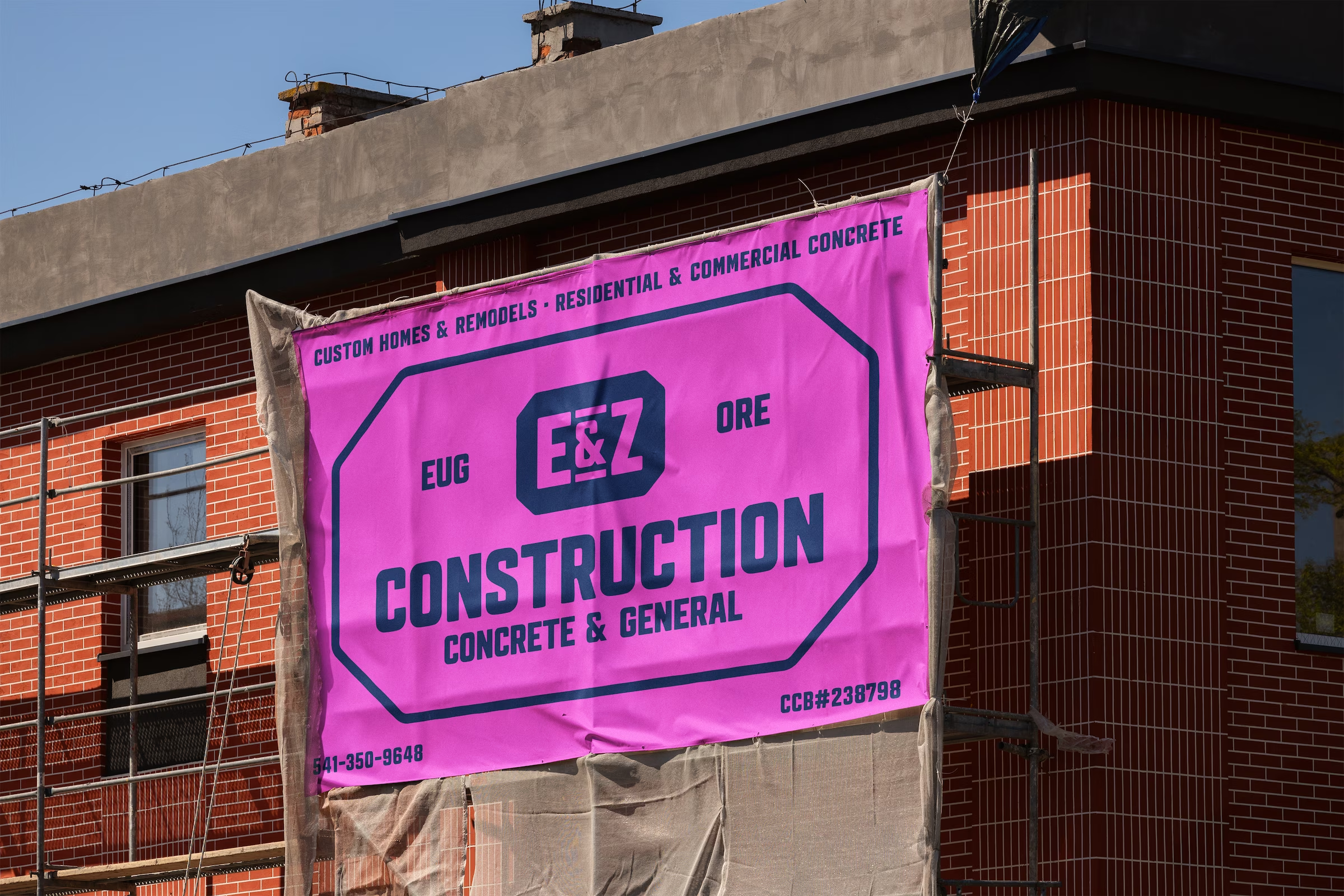
We design identity systems that reflect the integrated character of a design-build firm — professional enough to compete against established architecture firms, capable enough to stand alongside the best construction companies, and specific enough to communicate something true and distinctive about how your firm works.

Website
Design-Build Website Design

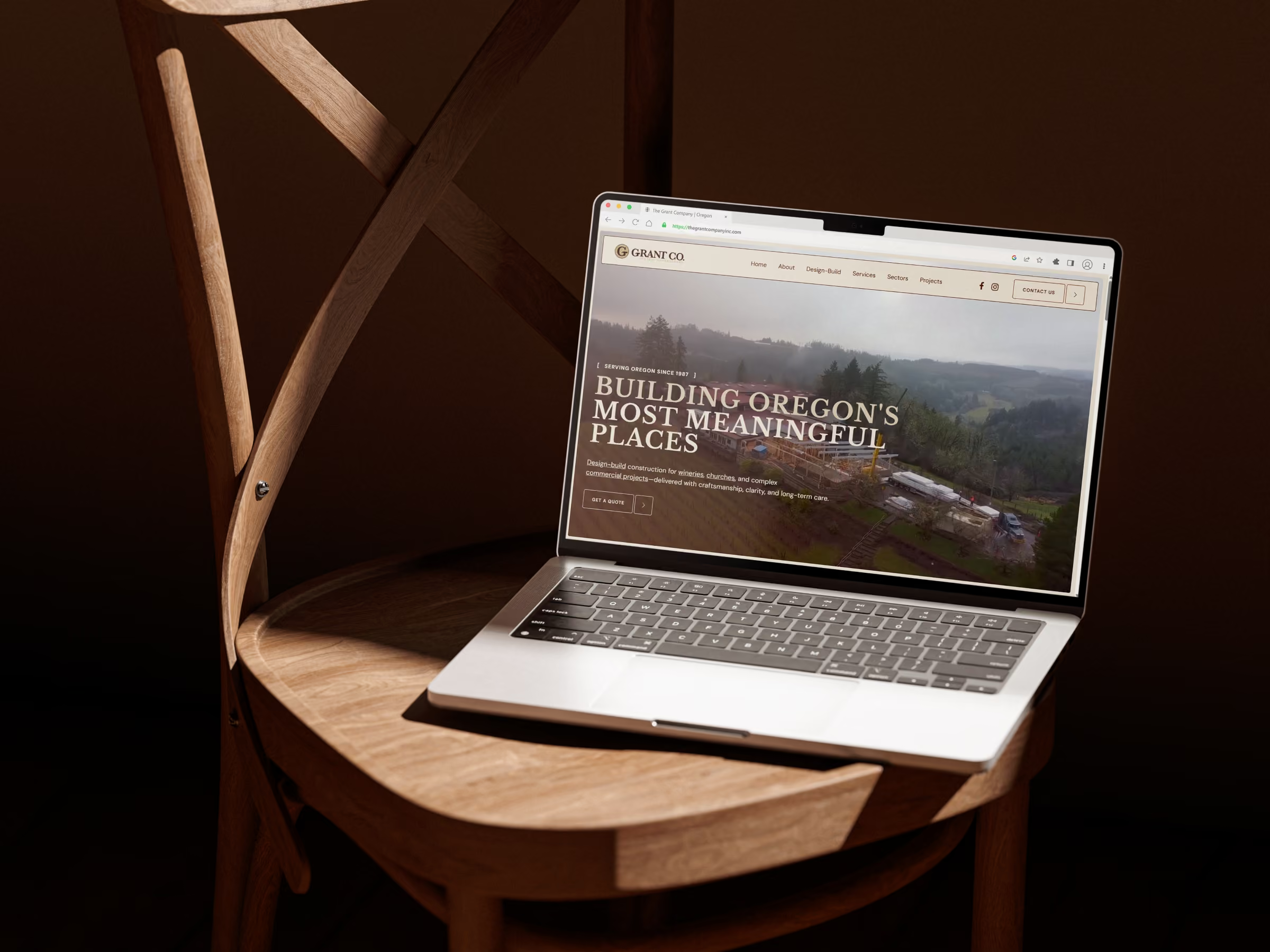
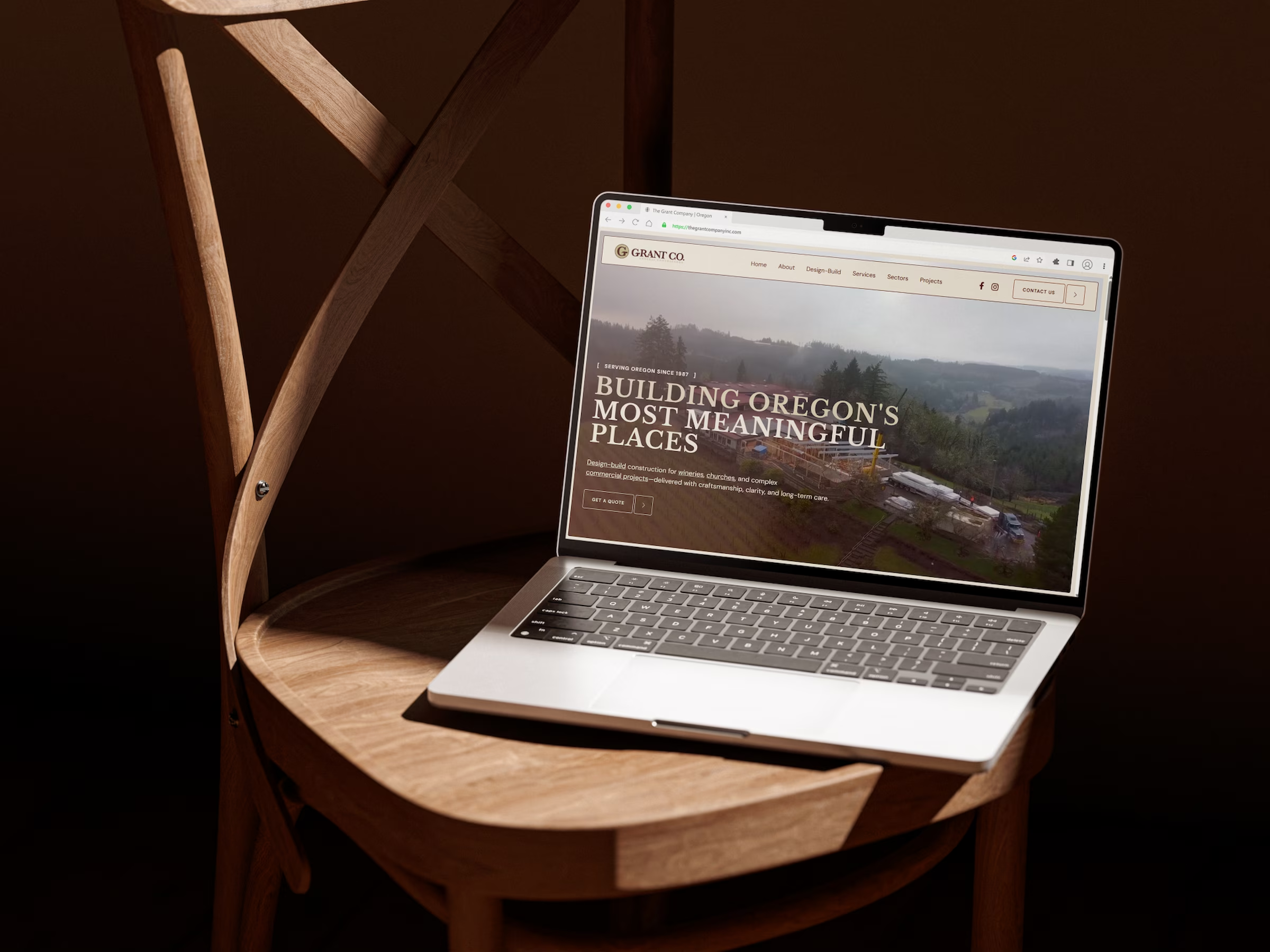
We design and build websites that explain the design-build advantage clearly, present your integrated project portfolio compellingly, and position your firm for the clients and project types you want to attract.

Who This Is For

Design-Build Branding Is Right for Your Firm If...

  • Your brand currently reads as either an architecture firm or a construction company — not as an integrated delivery partner
  • You are winning design-build work but spending too much time in early conversations explaining your model before you can talk about the project
  • You are trying to move into larger or more complex design-build engagements and need positioning that supports that pursuit
  • Your firm has a specific sector focus — commercial, healthcare, industrial, residential — and wants a brand built around that specialization
  • You have been operating on referrals and relationships and are ready to build a presence that extends beyond who already knows you
  • Your current brand was built when the firm was primarily architecture or primarily construction — and the integrated model has outgrown it
Reach out
Reach out
Why Fairbuilt

Design-Build Branding From Someone Who Understands the Model From Both Sides

Fairbuilt was founded by Brad Phillips, who spent years practicing architecture in the pacific northwest — working on projects that included both design and construction phases, and collaborating closely with design-build teams — before launching a design-build branding agency. We understand the integrated delivery model from the inside, not just as a marketing concept.

That means we do not just make design-build firms look credible, we help them communicate the integrated advantage in a way that actually changes how prospects evaluate the firm before the first meeting. We know how owners evaluate design-build versus design-bid-build for different project types. We know what the risks and rewards look like from the client side. And we know how to position a design-build firm so that the delivery model becomes a selling point rather than something that requires a lengthy explanation.

FAQ

Common Questions About Design-Build Firm Branding

How do you position a design-build firm against both architecture firms and construction companies?

By being specific about the integrated advantage rather than trying to out-credential either side. Architecture firms win on design quality. Construction firms win on execution track record. Design-build firms win on the combination. Reduced risk, better coordination, compressed schedule, and a single accountable party. The positioning we build emphasizes what that integration means for the client's specific project outcomes, not just the delivery method in the abstract.

We have strong relationships with a specific owner type — healthcare, industrial, institutional. Should we specialize the brand around that?

Often yes. A design-build firm with a genuine sector specialization, deep experience with a specific client type, project type, or building program, has a much stronger positioning story than a generalist design-build firm competing for every project. Sector-specific positioning makes the firm's experience more credible, the client relationship more intuitive, and the business development conversation shorter.

Our firm does both traditional delivery and design-build. How do you brand that?

Carefully. The most important question is which delivery model you want to grow and be known for. If design-build is the direction, the brand should lean into that, with the traditional delivery work positioned as a capability rather than a primary identity. If both models are genuinely equal parts of the business, the positioning work needs to create a unifying story that connects them. We work through that in strategy before any design begins.

How long does design-build firm branding take?

Brand strategy runs four to six weeks. Brand identity runs six to ten weeks. A full engagement covering strategy, identity, and a new website runs sixteen to twenty-four weeks. We set clear expectations before any project begins.

Testimonial

"I have been able to finally bring forth a confident and coherent business brand strategy."

Andrew L. Scheidt, AIA
Architect